Cognitive Systems Engineering
Upgrading the Human Operating System
Most of us believe that if we want to change a behavior—like becoming a better leader or learning how to remain calm under pressure—we simply need to "try harder" or "will" ourselves to be different. But there is a logical flaw in this approach.
Behavior is the output of a system. That system is your brain's wiring. If the wiring is faulty, outdated, or based on negative past experiences, "trying harder" is like trying to run a high-end software program on a broken computer. You can click the button a thousand times, but the system will still crash.
The Logical Flaw
This is why most people get stuck in a loop of repeating the same mistakes despite knowing better. The problem isn't effort—it's the infrastructure.
What is Cognitive Systems Engineering?
The Definition
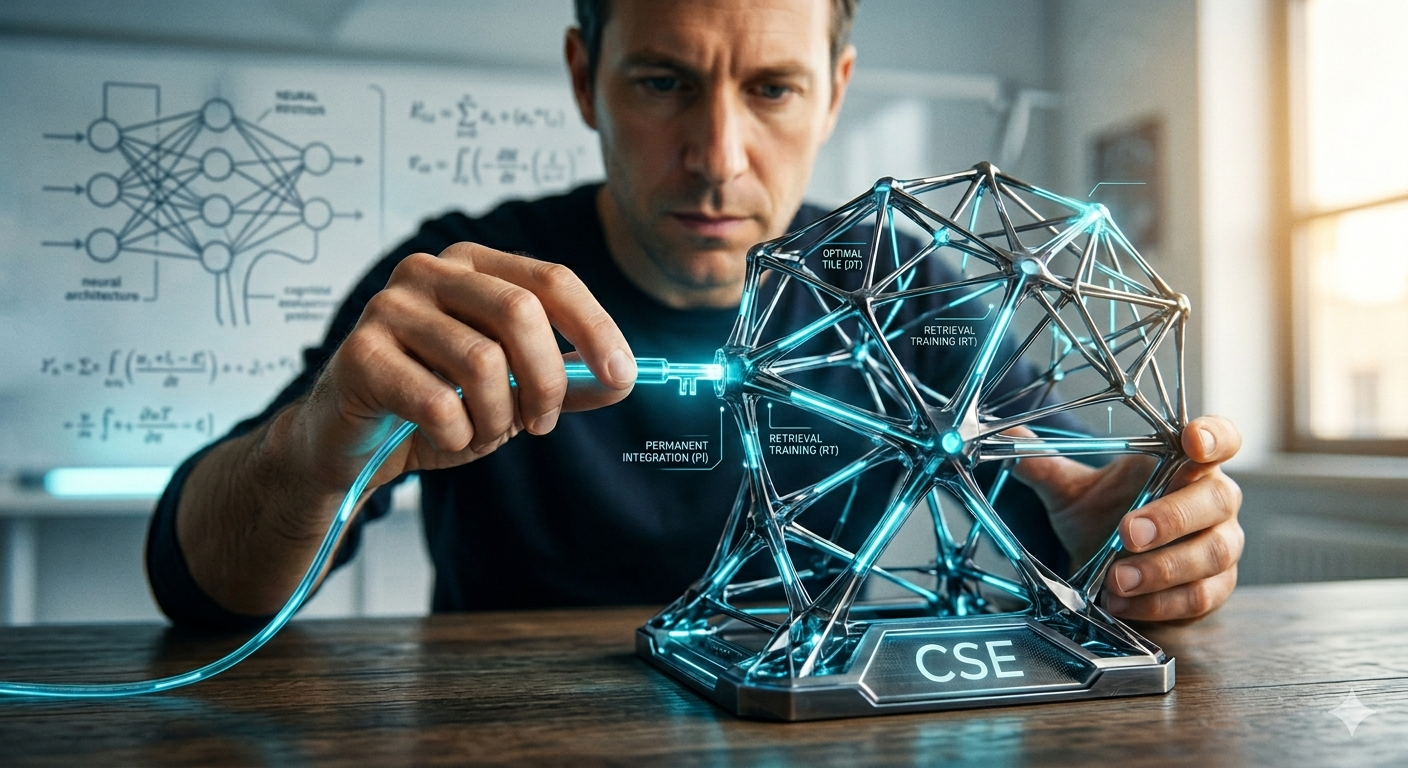
Cognitive Systems Engineering (CSE) is the process of treating the brain as a system that can be optimized. Instead of focusing on the behavior (the output), we focus on the engineering (the wiring).
We don't wait for life to teach us through trial and error—because life is an unpredictable teacher that often reinforces the wrong habits. Instead, we intentionally design a process to "re-code" the specific neural encoding of the brain.
How it Works: The Logic of Our Methodology
Through a unique technology that integrates brain science, behavioral studies, psychology, and education, along with a structured methodology, we follow a simple, logical sequence to ensure a skill actually "sticks":
- Encoding the Optimal Pattern (Building the Foundation): First, we must install the correct "code." We guide the brain to discover and adopt the optimal logic of a skill, ensuring the knowledge is deeply encoded rather than just memorized. We are building a clean, efficient blueprint of how a skill should work, creating a new cognitive foundation that replaces old, inefficient patterns.
- Training Retrieval (The Mental Workout): Knowing the right way to act is not the same as doing it under pressure. This is where most people fail. We place the brain in controlled, optimized environments that force it to "retrieve" that new pattern in real-time. By practicing the retrieval of the correct information repeatedly, we strengthen the neurological links. We are essentially building a "mental muscle" for that specific skill.
- Permanent Integration (The New Default): When you combine the right encoding with repeated, high-pressure retrieval, the brain stops fighting the new behavior and starts accepting it as the default. The "wrong" old paths wither away, and the "right" new paths become the automatic response.
The Bottom Line
Cognitive Systems Engineering is about moving from hope to design. We aren't just hoping for change; we are engineering the neurological infrastructure that makes change inevitable.
We fix the system first, so the behavior takes care of itself.
Let's keep the conversation going 💬
I'd love to hear your take on this—whether you see things differently or if this aligns with your own experience. If you're wondering how these ideas might look in your specific situation, let's talk about it.
✉️ Drop me a note: [email protected]